News round-up from Cornwallis
Kauri seedlings planted at Cornwallis
Around 100 special kauri seedlings have been planted along Cornwallis Beach’s Jubilee Walk track. The planting event took place in June 2026, the weekend of the shortest day, to help increase the number of the native tree in the area following losses from kauri dieback disease.
 The seeds for the plants were all taken from the largest kauri in the Waitākere Ranges, which has so far been untouched by the disease, and it is hoped the tree and its seeds may have some kind of natural immunity.
The seeds were then grown by Scion Research in Rotorua, before the young plants were transferred in April 2025 to a nursey at the Arataki Visitor Centre on Scenic Drive. The project, known as Te Kaawai Kauri, was organised and run by Te Kawerau ā Maki – a west Auckland-based iwi.
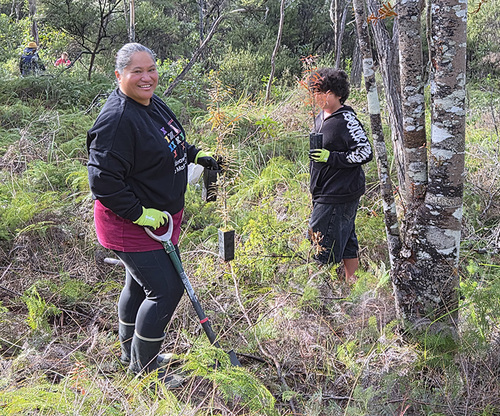 Jocelin Friend (pictured right), Environment Lead from Te Kawerau ā Maki, says the time was right to return the kauri to their whenua (land).
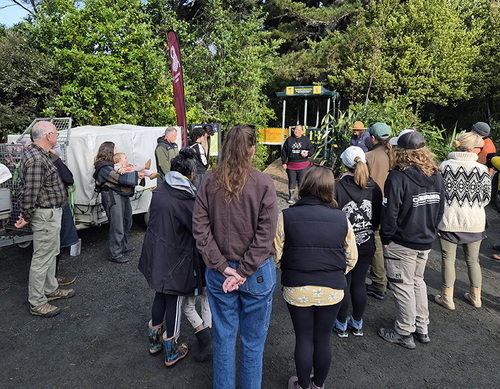
The seedlings were planted on the day by around 30 people, including representatives of Te Kawerau ā Maki, Auckland Council, BirdCare Aotearoa, Huia Trapping Group and the Petrelheads – a predator trapping group from Cornwallis.
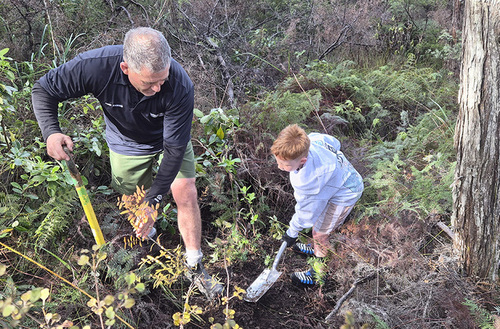
Auckland Council Senior Ranger Brendan Mackie (pictued at top of page with his grandson) says he has been a ranger for more than 35 years, but it is only his second time planting kauri.
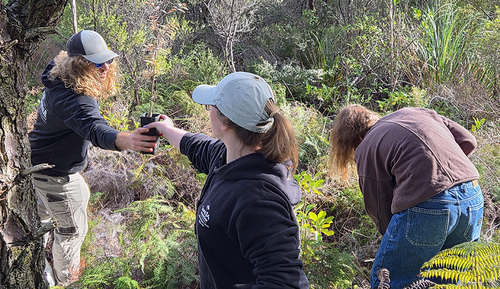 Mackie says the event was one of three planting days for the special seedlings. The second will be for the Auckland Council and the third is to plant kauri in a high-risk area deep with the Waitākere Ranges that has limited access. A rāhui was placed over forested areas in the ranges following the growth of kauri dieback.
Mackie believes that Auckland’s drier, warmer summers – brought about through climate change – may have been partly responsible for the expansion of the disease.
Funding groups help efforts to control predators and boost local birdlife
Three organisations that help support local environment projects are helping to try and make Cornwallis predator free.
Those groups are the Waitakere Ranges Local Board, the EcoMatters Trust and its 'Love Your Neighbourhood assistance program', and PestFree NZ. 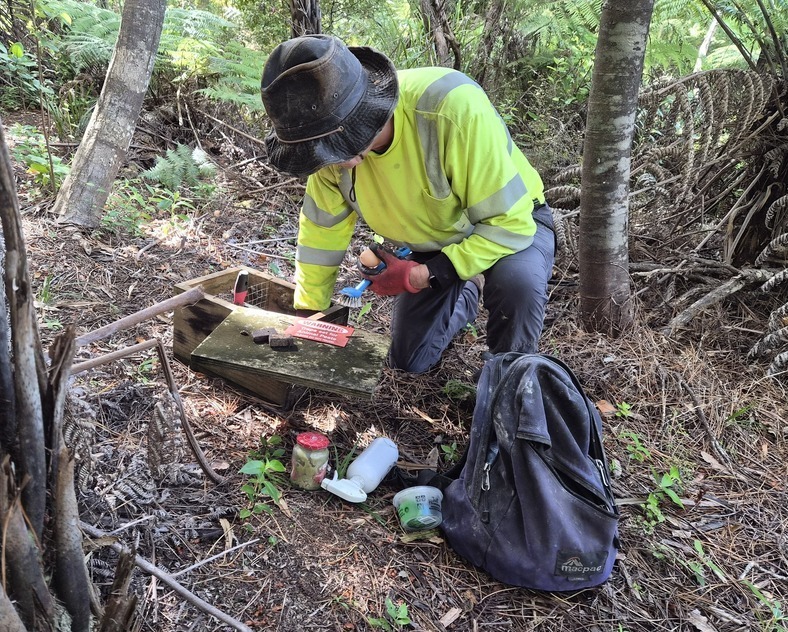

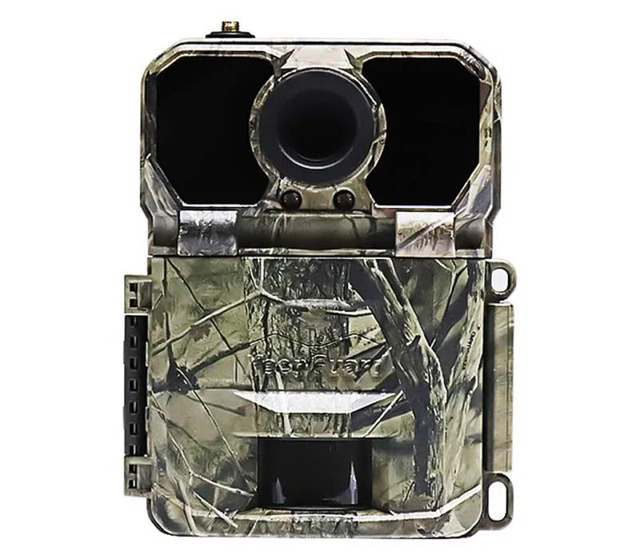
 Funds from the Waitakere Ranges Local Board and the EcoMatters Trust will be used to purchase SIM cards for the trail cameras (pictured below) monitoring a colony of grey-faced petrels at the southern tip of the Cornwallis peninsula. The two groups also funded one of the monitoring cameras, with the second one purchased with funds from PestFree NZ
The camera equipment allows for continuous monitoring of petrel activity and recording any predator incursions from rats, mice, stoats or hedgehogs. Video clips of animals moving are taken during the day or night.
The funding will also be used to buy backpacks and supplies to help volunteers maintain the trap lines.
A control programme targeting rats, mice, stoats and possums has been running on the peninsula for over 10 years now and was extended a few years ago to include the land west of the Kakamatua Inlet.
The total area under control is 310 hectares, of which privately owned land and dwellings makes up just 10%.
 Some predator activity is still being recorded at the southern tip of the peninsula on Puponga Point, the location of the grey-faced petrel colony, however control programme organisers believe the predator threat is under control there and petrel colony is slowly growing.
With fewer rats, stoats and mice on the peninsula, invertebrates such as weta and the numerous bird species (including penguins and grey-faced petrels) that were once prolific in the area, are beginning a slow recovery. At least a third of local fledgling petrel chicks are estimated to make it through to adulthood, which is considered good for a land-based colony.
The control work is being carried out by local community group SCOW, which originally formed to “Save Cornwallis’ Old Wharf”, but now works to help maintain and upgrade assets throughout the peninsula. This includes helping with such issues as removing graffiti from the wharf, communicating with Auckland Council on stormwater drain clearance and lobbying for better footpaths along Cornwallis Road.
A sub-group of SCOW, known as the Petrelheads – due to its work in protecting the grey-faced petrel colony on the southern tip of the peninsula – currently organises the control work, with financial support groups such as the Waitakere Ranges Local Board, PestFree NZ and the EcoMatters Trust.
Alex Duncan of the Petrelheads says they are indebted to those people who regularly check trap lines each month or so, but they are also looking for more volunteers to help with this work. If you are interested, you can email pestfreecornwallis@gmail.com for more information.
The Petrelheads work alongside a similar team in nearby Huia that is also doing predator control work.
Wild pigs on Cornwallis Peninsula threaten petrel colony
A version of this article originally appeared on the Stuff website.Auckland councillor Ken Turner says having feral pigs in the Waitākere Ranges is “unacceptable” and has called on his own council to do more about the issue.
Feral pigs have been in the regional park for decades, despite efforts to control the population.The animal is a designated pest in Auckland and it is illegal to release them into the wild in the region.
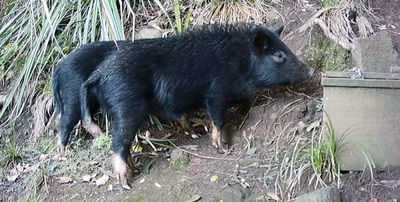
Two short video clips supplied by the Petrelheads bird predator protection group were shared online by Waitākere Ward councillor Ken Turner. The clips show two pigs at a petrel colony at the southern tip of the Cornwallis Peninsula.
Wild pigs can be lethal to burrowing birds like the grey-faced petrel, as they will collaspe burrows with their snouts, eating eggs and young chicks.
Turner said the pigs “didn’t just show up overnight” and criticised Auckland Council, saying pest maintenance in the region had been “neglected”.
Earlier this month, in another post, Turner said he had “never seen pigs in the numbers they are today” in the Waitākere’s, blaming the council for letting them get “totally out of control”.
According to the Department of Conservation, wild pigs breed year-round, especially in spring and summer. Litter sizes can range from six to ten piglets.
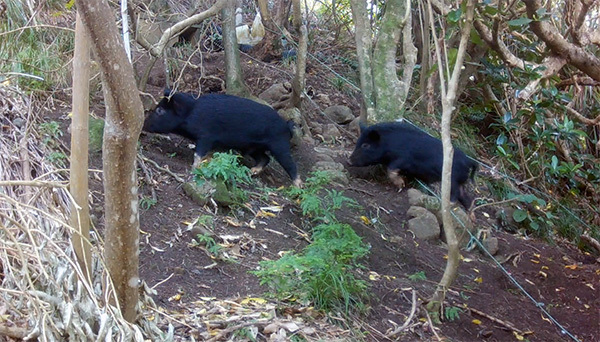
Auckland Council confirmed to Stuff they had seen an “increase in the number of wild pigs” found in southern sections of the Waitākere Ranges in 2026.
Manager Regional Parks, Scott De Silva, said a “considerable effort has been underway for several weeks to reduce the population” and that “controlled hunting” had delivered “strong results”. De Silva said they had delivered feral pig control for over 10 years in the Waitākere Ranges, but said there had been a “small pause” in late 2025 and earlier this year in the southern half of the park while focus turned to other “pest management priorities”.
He did say, though, that during this time, hunting control measures continued in the northern half of the ranges.
De Silva said the council was working with “highly skilled professional contractors” to reduce the pig population through a five-month control programme.
“Since late July, more than 100 pigs have been removed from the park, with the majority located in the southern areas from Piha Road across to Whatipu and Huia.
“We’ll continue targeting pigs through to November when we expect the population to be brought down to an acceptable level.”
Meanwhile, Forest & Bird said it supported the “continued and increased efforts to eradicate pigs” from native bush in Auckland.

- Buy a trap
- Cornwallis high and low tide chart
- Fishing tides for Manukau Harbour
- Is Cornwallis safe for swimming?
- Facilities at Cornwallis Beach
- MPI fish and shellfish regulations
- Waitākere Ranges Local Board
- Manukau Harbour Restoration Society
- Detailed swell map for region
- Huia Settlers Museum website
- Huia & Cornwallis Ratepayers Assoc.